
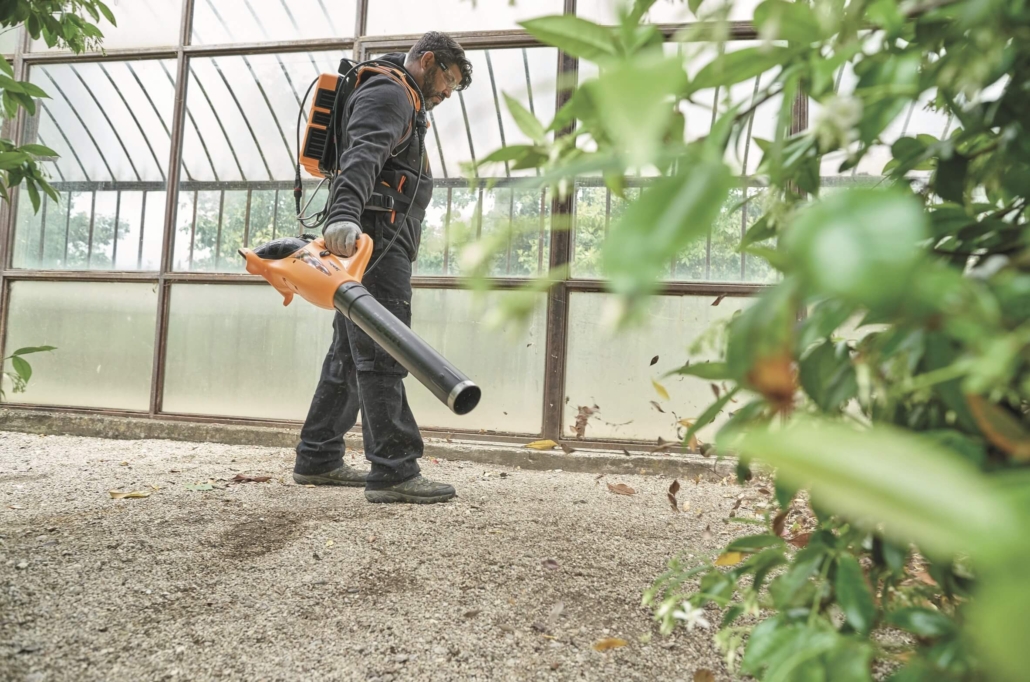
Quiet Power, Serious Performance: The Evolution of Pellenc’s Battery-Powered Blower Range
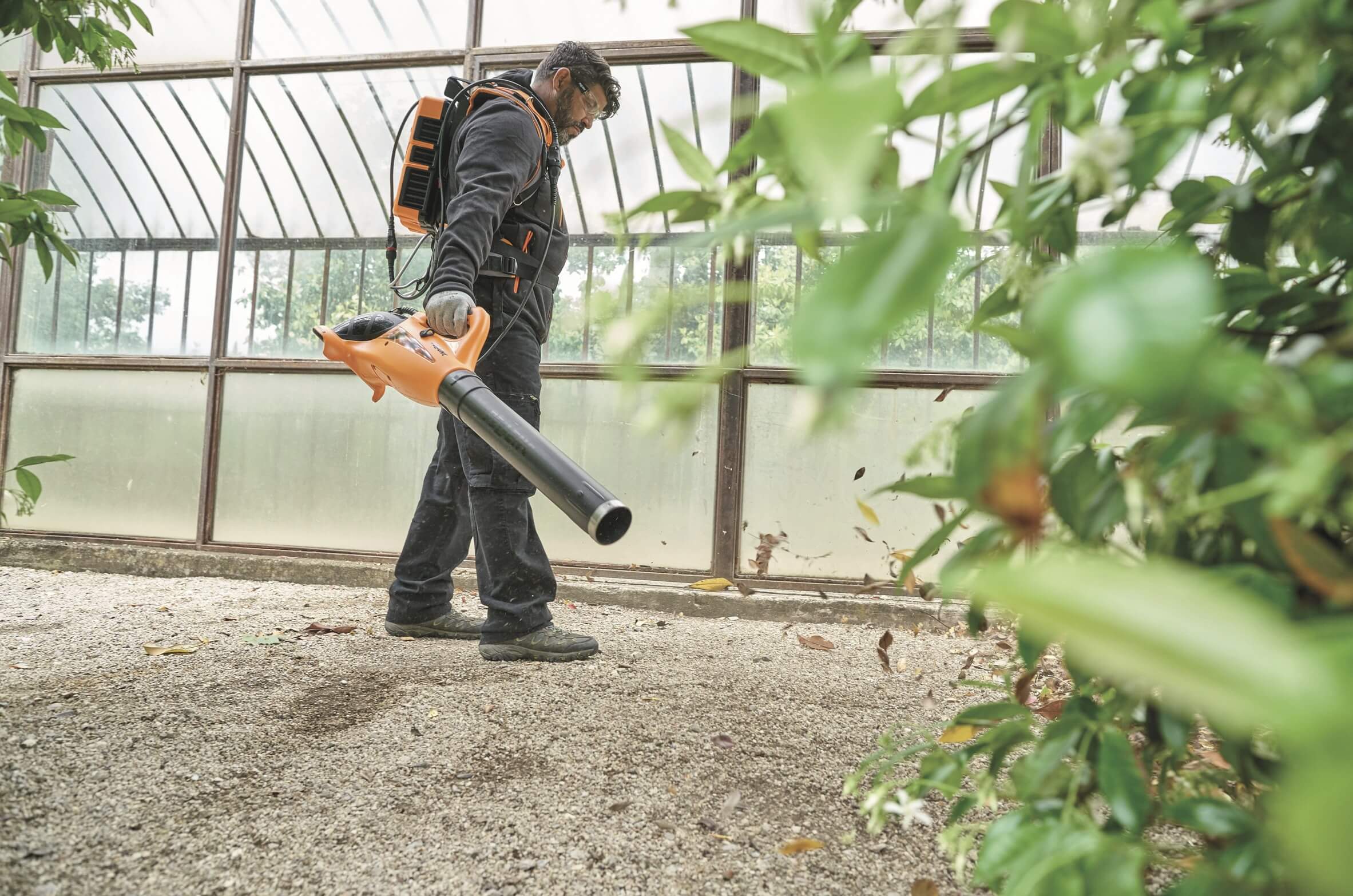
For amenity managers, local authorities, and landscaping contractors, the seasonal battle against leaf litter, tarmac debris, and wet detritus is a relentless task. While commercial blowers have historically relied on noisy, high-emission petrol engines, strict urban noise regulations and corporate sustainability targets have rapidly accelerated the shift toward zero-emission tech.
At the absolute forefront of this transition is Pellenc, distributed exclusively in the UK and Ireland by Etesia UK. Long revered for its pioneering commercial lithium-ion engineering, Pellenc has systematically expanded and refined its commercial blower portfolio. With the recent introduction of the highly accessible Essential Line alongside their heavy-hitting Airion 3 professional standard, grounds teams now have a targeted, petrol-matching tool for every operational tier.
The Professional Standard: Airion 3
For intensive, day-in, day-out clearance, the Airion 3 remains the lightweight powerhouse of choice for municipal and large-scale amenity teams.
Ergonomics Over Fatigue: Weighing a record-breaking 2.55 kg in hand, the Airion 3 tackles one of the biggest hidden operational hazards of clearing: musculoskeletal strain. Traditional blowers create a rotational twisting force on the wrist when throttled. Pellenc solves this via a patented angled air intake, which completely counteracts the standard gyroscopic recoil, keeping the tool perfectly balanced along the vertical axis from shoulder to wrist.
Intelligent Power Management: Delivering an impressive 17.5 N of effective thrust and an actual airflow of up to 920 m³/h, the tool easily handles heavy, water-logged autumn leaves. It features four working speeds plus a trigger-activated Boost mode.
All-Weather Robustness: Built around a tough magnesium-alloy turbine housing, the tool boasts an IP54 sealing rating, making it completely dustproof and 100% waterproof for relentless operation in unpredictable UK weather. When paired with the ULiB 1500 backpack battery, it delivers up to an astonishing 6 hours of continuous runtime.
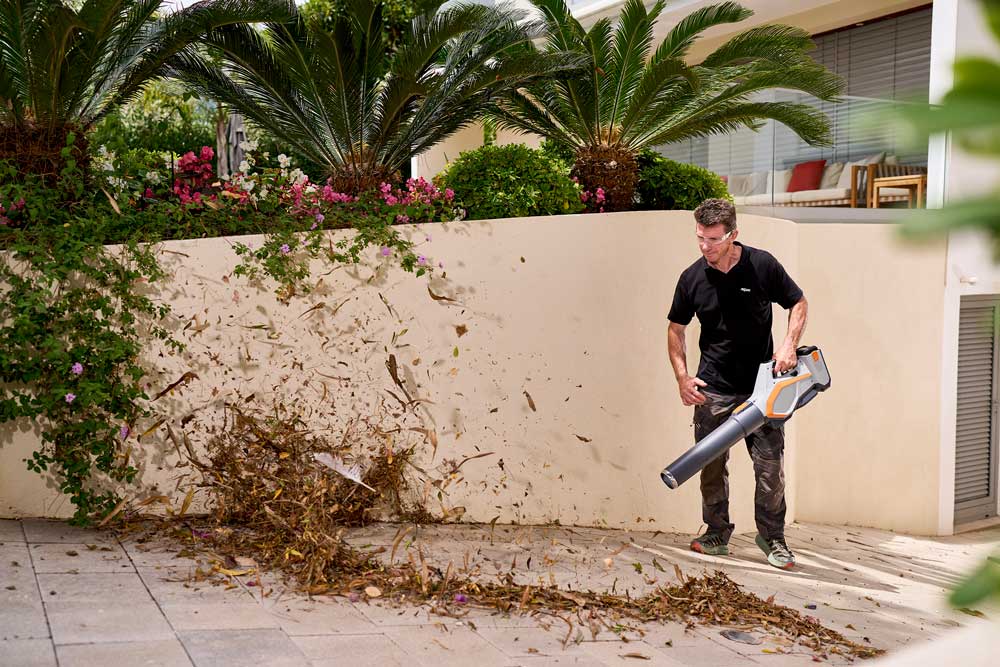
Accessible Commercial Tech: The Airion Essential
Recognising that smaller contractors, heritage sites, and educational facilities need professional performance without the top-tier price tag of massive backpack batteries, Pellenc recently rolled out the Airion Essential.
This clever development shifts the narrative by introducing high-performance, on-board battery clipping systems directly onto the tool body.
Cordless Freedom with Punch: Retaining the signature patented angled intake to eliminate wrist fatigue, the Airion Essential is fully ambidextrous. Despite being part of Pellenc’s budget-conscious professional line, there are zero compromises on raw muscle: it achieves a massive 23 N of thrust in boost mode (18 N at regular high speed) and a high velocity 1,200 m³/h airflow.
Smart Feedback: An integrated, backlit LED Human-Machine Interface (HMI) gives operators immediate visibility over remaining battery percentages, selected cruise control options, and its three operating speeds.
On-Board Flexibility: The Essential functions via ultra-lightweight plug-in batteries on the chassis—either the ULiB 200E (keeping the total working weight to 4.4 kg) or the higher-capacity 400E (offering up to 2 hours of continuous work). Crucially for growing fleets, a simple adapter plate means it remains backward-compatible with Pellenc’s existing long-range backpack battery harnesses.
Built for a Circular Economy: The LONGTIME® Assurance
In a market frequently cluttered with “disposable” commercial equipment, Pellenc separates itself where it matters most: long-term lifecycle value.
Both the Airion 3 and Airion Essential have been awarded the prestigious, independent LONGTIME® label. This European certification guarantees that the tools are purposefully engineered for durability and true repairability.
Pellenc guarantees that critical components—from the brushless motors to electronic control boards—will have readily accessible spare parts for a minimum of 10 years. For local authorities calculating total cost of ownership (TCO) and capital equipment lifespans, this metric alone turns a tool purchase into a secure, long-term fleet asset.

